Sunday, 4 February 2018

Sunday, 24 December 2017
Merry Christmas and Happy New Year
Nature Care Ayurveda Yoga 🧘♀️ Detox and Rejuvenation Centre Petersham Sydney
www.naturecareayurveda.com.au
Ph 02 9572 6990
Wishing you all a very Happy 😊 Christmas 🎄🎄 and Happy New Year🙏🏼.
ॐ सर्वे भवन्तु सुखिनः सर्वे सन्तु निरामयाः ।
सर्वे भद्राणि पश्यन्तु मा कश्चिद्दुःखभाग्भवेत् ।
ॐ शान्तिः शान्तिः शान्तिः ॥
Om Sarve Bhavantu Sukhinah
Sarve Santu Nir-Aamayaah |
Sarve Bhadraanni Pashyantu
Maa Kashcid-Duhkha-Bhaag-Bhavet |
Om Shaantih Shaantih Shaantih ||
Meaning:
1: May All become Happy,
2: May All be Free from Illness.
3: May All See what is Auspicious,
4: May no one Suffer.
5: Om Peace, Peace, Peace
A well said quote “If you want to see your FUTURE look into your PRESENT action”
Similarly Ayurveda (#AncientWisdomOfHealing) believes, if we want to be healthy need to think 🤔 what is good for us and what need to correct before it’s too late.
We wish you all good health also enjoy this #PositiveEnergy time around the Globe 🌍.
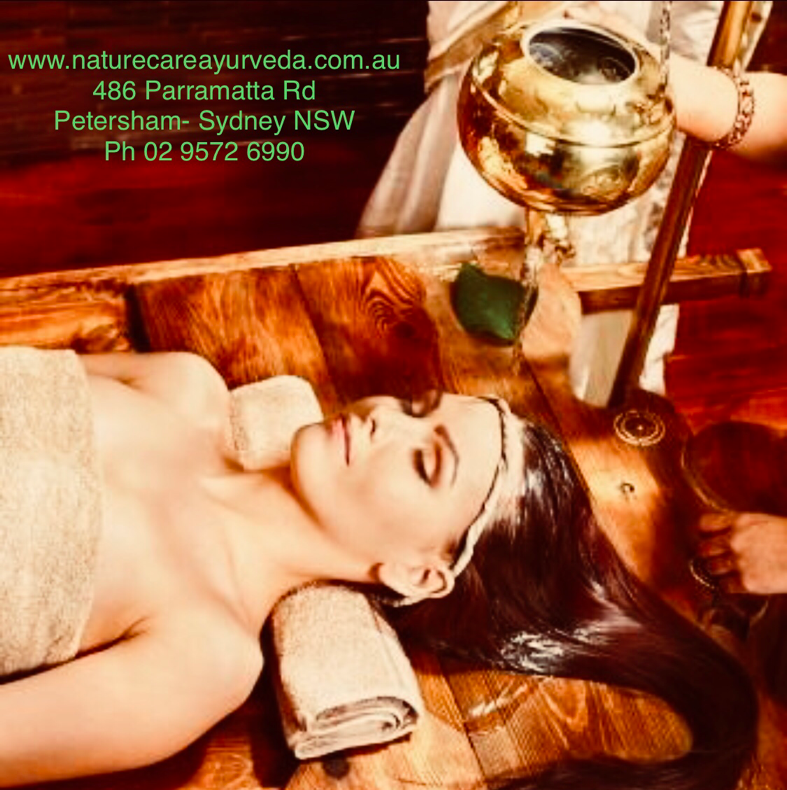
Also Don’t forgot to Cleanse, Service and Rejuvenate #DETOX #PANCHAKARMA #RASAYANA #SHIRODHARA #ABHYANGA your body at NATURE CARE AYURVEDA to start your New Year NEW YOU




Friday, 24 November 2017
Yoga and eating food with hands

https://naturecareayurveda.com.au/
Yoga and eating food with hands
Eating food with the hand is a part of tradition, Culture,
ritual and health based on the concept of Pancha
Karma Indriya ( five organs of action ) and pancha janana Indriya (five organ of senses ) of yoga and Ayurveda
in INDIA.
Eating is
supposed to be a sensory experience and it is said to evoke emotion and
passion. According to the Vedas, hands are the most precious organs of action.
The scriptures reveal how every finger is an extension of the five elements.
Through the thumb comes space, with the forefinger comes air, the middle finger
is fire, the ring finger is water and the little finger represents earth.
Hence,
eating with one’s fingers stimulates these five elements and helps in bringing
forth digestive juices in the stomach.
The nerve
endings on our fingertips are known to stimulate digestion. Feeling your food
becomes a way of signalling the stomach that you are about to eat. You become
more conscious of the taste, textures and aromas.
Eating food is
not merely a way to satisfy the hunger, but to sublimate the senses and infuse
satisfaction. It is a way to nourish the inner self.
Traditionally,
the six tastes (Sweet, Salty, Pungent, Astringent, Sour and Bitter ) and varied
food items are served all together on one platter(called Thali )which
immediately pacifies the sense of vision, smell, taste and touch.
Silence is
observed, in order for the sense of hearing to be as less stimulated as
possible and take the stimulus from the sub vocalization of the sound of
chewing. All of this help in the activation of salivary glands and salivary
amylase (the enzyme responsible for aiding in the catabolic action on the food).
The five sensory organs ( eyes ,ears, nose , tounge and skin ) when engaged in
the activity of eating food in the above said traditional method .Have minimal
outgoing tendencies and the senses go into the anabolic or energy conservation
mode so that this energy is utilized for digestion .
The five
organ of action - hands ,feet, organs of reproduction, organs of eliminaton and
vocal cords have the tendency to respond according to the information collected
by the five sensory organs and are generally catabolic in nature.
·
The
use of hands allows one to feel the texture and temperature of the food , which
further stimulates the salivary glands using the sense of touch, smell, and
sight. it also prevents one from eating very hot or very cold food as these
extreme temperatures are not pleasing to the human body and neither is good for the digestive fire.
·
As
we use hands to eat food, we tend to bring the fingers and thumb close to each
other , which forms Sumana Mudra. The center of the palm is the seat of
digestive organs as per acupressure. When we use hands for eating food, we
naturally trigger these pressure points, which help in the release of digestive
juices from the liver and gall bladder.
·
The
center of the palm is also one of the most therauptic Marma points that
activate the release of pranic energy in the entire body, which is triggered in
the use of hands
·
The
general habit of using the dining table for having meals may lead to
overeating. When we sit cross legged on the floor to eat food, every time we
bend forward to break a morsel it puts pressure on the stomach and once the
stomach being happily full and anything more would be over eating. While sitting completely upright we supress
this natural urge/ sign from the body's innate intelligence. As per Ayurvedic principles, the stomach
should be only 3/4th filled with food and the rest 1/4th space should be
allowed for the free movement of gases and for the process of digestion.
Vedic ritual
of eating food
Pancha Pranopasana Mudras can easily be practised by one
and all before meals. They invoke a feeling of gratitude and connection with
the process of eating (Anna Grahan) . In addition, they help in balancing the
main vital current known as Mukhaya Pranas .
Practice this short exercise for revising this set of
Mudras before your lunch / dinner . This is known as parishinchami (encircling with water), and the eating of
small helpings of rice is known as
pranahooti ( offering to the vital breeths ). It is performed twice a day
before the meals .All other meals are
considered "extra " or secondary (upa bhojanam ). Parisecana
mantra is sort of a "protection"for the food we are about to eat .
1.Parisecana: Take a comfortable seated posture , preferably cross legged position (sukhasna)on the floor .Chant the mantra :
Satyam tvartena parishinchami (O Food !you are true . I encircle you with
divine righteousness.) And circumambulate the food with a sprinkling of eater. This
sprinkling of water is known as
"parisecanna." At night, this mantra is :Rtamtvasat yena
parishinchami.
2.Pranahoothi: Perform the following Pranahoothi . Use
only the thumb ,index finger and middle finger of the right hand take a very
little amount food and swallow it without touching the teeth . The idea is that
by first making an offering to the Pranas we pay homage to their life-giving
power by virtue of their performing the bodily activities that are crucial to
our survival. In this way , this ritual recognizes that not only is food important to survival, but
the very bodily function that we take for granted are essential, and we owe all
of this to the supreme. who sits as the superintending power behind all bodily
activity, no matter how mundane
·
Om pranaye Savaha ( Hold Prana Mudra in left
hand) and meditate upon the mouth regime
·
Om Apanaya Savaha ( Hold Apana Mudra in left
hand) and meditate upon the lower body below the navel
·
Om Vayana Savaha ( Hold Vayana Mudra in left
hand )and meditate upon the limb (arms, hands, legs, and feet ) and heart
·
OmSamanya Svaha (Hold Samana Mudra in left
hand)and meditate upon the navel region
·
Om brahmani ma atma amrtavaya. This
means," May my self be united in the supreme, so that i may attain
immortality "
Dr Naveen Shukla
Founder Director Nature Care
Ayurveda
State Rep. For AAA (NSW)
Australia
For more information of Ayurveda please click at https:// www.naturecareayurveda.com.au
or like our page www.facebook.com/sydneyayurveda
Ph 02-95726990
or like our page www.facebook.com/sydneyayurveda
Ph 02-95726990
Saturday, 28 October 2017
A Successful Ayurveda Event NSW Sydney Glimpse
 |
A Complete Holistic Bliss
www.naturecareayurveda.com.au
486 Parramatta Rd, Petersham 2049
Ph 02 9572 6990
|
Nature Care Ayurveda would like to say THANK YOU to all the dignitaries, Consulate General of India, Consul (Commercial) Mr Chandru Appar,
Counselor Parramatta Mr Sameer Pandey,
Chief guests and our speakers for evening Dr Shaun Mathews, Dr Raj Kumar Sharma,
Farida S Irani- Director Subtle Energies,
Media partners (Indian Link, Desi Australia), Harmohan Walia, Vivek Tiwari,
President AAA (Australasian association of Ayurveda) Dr Santosh Kumar Yadav-Melbourne, AAA Representative NSW Dr Naveen Shukla,
Sydney Sanskrit School
all AAA team and our valuable guests and friends of Nature Care Ayurveda- Neelam, Kanchan, Pankaj, Avanti, Deepak & all.
God doesn’t give us what we can handle, God helps us handle what we are given.

It was really a very informative evening with lots of knowledge exchange from the pioneers in the Industry.
Every civilization in the World has their own traditional medical systems but Ayurveda is said to be as old as the Universe itself. Ever since the man started the journey of evolution with the mental and intellectual development man started understanding nature and how it works on humans to stay healthy.
Ayurveda believes that governing principle in Nature governs our body too. Body- Mind and Soul they are like three tripods and combination called Purusha (Human)- THE SUBJECT MATTER OF AYURVEDA.
The Goal of Ayurveda is to prevent illness and promote health in mankind. The great rishis (Seers) studied and explained the effects of all part of plants, minerals etc on human body to attribute this knowledge for the benefit of mankind also to complete the goal of Ayurveda.
Here are some glimpse of the beautiful priceless evening.

Welcome Note

Lord Dhanvantari Mantra chanting by students of Sanskrit School Sydney

Consul Commercial Mr Chandru Appar & Farida S Irani-Director Subtle Energies

AAA President Dr Santosh appreciation token to NSW representative Dr Naveen Shukla


Display of Herbs

Dr Raj Kumar Sharma (International Speaker)

AAA president Dr Santosh appreciation token to Dr Vishal Sharma (Nature Care Ayurveda)

Mr Sameer Pandey (Counselor Parramatta NSW)

Consul Commercial Mr Chandru Appar appreciation token to AAA President Dr Santosh


Dr Shaun Mathew


Kanchan & Pankaj with Dr Naveen Shukla, Dr Shaun Mathew & Dr Vishal Sharma

Avanti (Psychologist- My Prana Portal) & her friend with Dr Vishal Sharma

Deepak Sharma with Dr Vishal, Dr Naveen, Dr Shaun & Dr Gaurav


Mr Chandru Appar (Consul Commercial- Consulate General of India Sydney)

Dr Naveen Shukla with Dr Priya, Dr Taruna and Dr Anisha

Dr Shaun Mathew (Guest Speaker NSW)


Dr Vishal, Dr Santosh, Dr Naveen, Dr Shaun, Consul Mr Chandru & Dr Raj Kumar Sharma
 |
| www.naturecareayurveda.com.au 486 Parramatta Rd Petersham 2049 contact@naturecareayurveda.com.au Ph 02 9572 6990 Sarve Santu Niramaya |
Monday, 23 October 2017

Sunday, 22 October 2017
Diwali Celebration and Lord Dhanwantari Pooja at Nature Care Ayurveda Glimpse
Glimpse of Diwali Celebration
at
Nature Care Ayurveda
A Compete Holistic Bliss


NATURE CARE AYURVEDA is wishing you, your family & Loved ones a very happy Diwali. May this Festival of Lights bring all happiness and prosperity to your life and remove all the darkness from everyone’s life.
HAPPY DIWALI
 💐💐
 🎉🎉
 🕉🕉🕉🎉🎉💐
Ph 02 95726990
The sacred and brilliantly lit festival of Diwali is an integral part of the ancient Indian civilization and its history is magnificently intertwined with origins and evolution of Hindu religion.
Today, this festival has become epitome of enjoyment and is celebrated with great exuberance across the country.
The mere mention of Diwali conjures up images of diyas, firecrackers and gifts; however, Diwali is not just about these things, there is a much deeper significance to it.
Tracing the roots of this festival and understanding its history may help one actually fathom the real meaning of Diwali. This article is an endeavor to shed light on the history behind the origins and grand celebrations of this vivacious festival.


History of Diwali
The traces and clues to the history of Diwali are embedded in different interesting and fascinating legends of Hindu mythology that are corroborated by various ancient religious scriptures, such as the Puranas. The festival of Diwali is celebrated for five days in India and each day holds its own importance.
The first day of Diwali festivities is known as Dhanteras or Dhantryaodashi, which is celebrated on the 13th day of the month of Ashwin. As per the legend, it is believed that on this day, Dhanvantari - the physician of the gods came out of the ocean with a pot of amrit, while it was being churned by the gods and the demons. This is believed to be a momentous day for the mankind. It is also believed that Goddess Lakshmi also originated from the ocean on this day. Hence, the day is considered very auspicious for financial investments.
The mystical history behind the second day of Diwali festivities is also quite interesting. It is said that on this day, Lord Krishna along with his wife Satyabhama, vanquished a demon named Narakasura. This demon after attaining a boon from the gods had become so powerful that both heaven and earth had become defenseless against him. He not only defeated Lord Indra but also stole the priceless earrings of Mother Goddess Aditi. His atrocities did not stop at this; he also abducted 16,000 daughters of saints and deities. To end his torturous reign, Lord Krishna killed him a day before Diwali and the day came to celebrated as Narak Chaturdashi.
The third day of the festivities, known as Deepavali, is the most important day of Diwali celebrations as it involves grand revelry. Hindu mythology traces historic origins of Deepavali back to the great epic Ramayana that narrates the life saga of Lord Rama, an incarnation of Lord Vishnu. As per this epic, the first Deepavali was celebrated by the people of Ayodhya to commemorate the return of Lord Rama along with his wife Sita and brother Laxman from a 14 year long exile. The fourth day has its own mythological history and commemorates the act of Lord Krishna, in which he picked up a hillock named Govardhan situated near Mathura to protect the villagers from insistent rain.
The last and final day of Diwali festivities is known as Bhai Dooj. It is believed that on this day, Lord Yama visited his sister Yamuna and was so happy to spend time with her that he declared that whosoever brother shall visit his sister on this day will be blessed with health and wealth. Thus, the day is dedicated to the pious relationship between a brother and sister. Apart from Hindu mythology, the history of Diwali is also closely related with histories of Sikh and Jain communities. The Sikhs celebrate the day as it was on this day that their sixth Guru, Guru Har Govind attained freedom from Mughal captivity, whereas the Jains celebrate Diwali as they believe that Lord Mahavira, the founder of Jainism, attained 'Nirvana' on this day.

 |
| 486 Parramatta Road Petersham-2049 Ph. 02 9572 6990 |
Subscribe to:
Posts (Atom)