Sunday, 9 February 2020

Kampavata (Parkinson’s disease) Ayurvedic view


Image result for parkinson picture


Kampavata (Parkinson’s disease) Ayurvedic view
Ayurveda the science of healing mainly focus on aim “swastasya swatha rakshanam athurasya vikara prashamana” the great words of ancient sages that could be simplified as prevention is better than cure. There is condition in which occurred pathology cannot be reversed but can be arrested from further progression and hence the person can be saved from its complication. Vata the prime factor of movement is the basic support for even other Dosha since it’s the only Dosha which could move and help other components to move if vata gets deranged all the other components will also get affected.
Parkinson’s is a motar system affecting disease, related to CNS (central nervous system). It is caused due to degeneration of pigmented neurons in zona compacta of substantia nigra resulting decrease of dopamine level in brain further leading to motar disfunction or in simple words its just the death of dopamine generating cells. Still the cause of death of cells are unknown. Here the person will be unable to control his movement since the dopamine is related to movement.

Ayurvedic view of Parkinson:
Ayurveda, we mainly give predominance to dosas (vata, pitta, kapha) and its equilibrium. In ayurvedic references Parkinson’s could be co-related to KAMPAVATA or VEPATHU which is caused by aggravated vata. In this condition, generalized involuntary movements of all parts of body / head only.
The medications of kambavata is explained in our brihatries (susrutha samhitha, charaka samhitha and astanga hrudaya). In Charaka samhitha, a detailed description is provided along with its line of management.
Incidence:
1.       Prevalence increases from 1% in people over 65 years to 5% people over 80.
2.       Both men and women are equally affected.
3.       Rarely seen in young generation, the Parkinson seen in young generation is coined as young onset PD.
Aetiology:
Not well known but factors contributing pathogenesis are:
1.       Genetic factors
2.       Accelerated aging
3.       Use of drugs like reserpine, ethanol etc.
4.       Repeated history of fall
5.       Toxins such as environmental (methyl-phenyl-tetrahydropyridine (MPTP) etc.)   
Symptoms:
Classical triads of Parkinson’s:
1.       Resting tremors
2.       Bradykinesia
3.       Rigidity
The other symptoms include.
1.       Decreased facial expressions
2.       Stooped posture
3.       Pill rolling movements
4.       Masked face
5.       Sluggish speech
6.       Difficulty in swallowing
7.       Low rate of blinking

Complication:
1.       Frequent falls
2.       Incapacitation
3.       Depression
4.       Dementia
5.       Urinary incontinence
6.       Constipation
7.       Aspiration etc.

Management:
1.       Nidana Parivarjana (avoiding of causative factors like enviornmentals, toxins, drugs etc.)
2.       Shodana chikilsa (bio clensing therapies like Panchakarma – the detoxification)
3.       Samana Chikilsa (internal medications)

Some effective drugs and oils in Parkinson’s:
1.       Mahanarayana Thailam
2.       Ksheerabala Thailam
3.       Sahacharathi Thailam
4.       Brahmigritham
5.       Aswaganda Choornam
6.       Dasamoolakwatha etc.
*Note: These drugs should only be taken under ayurvedic physician supervison.

Pathya-Apathya

Pathya (Compatible food) :
1.       Shali (Brown Rice)
2.       Citrus fruits (Orange, Pomegranate, Peach etc.)
3.       Vegetables
4.       Nuts
5.       Milk and fresh milk products except cheese
6.       Garlic
7.       Asafetida
8.       Sprout beans etc.
9.       Regular exercises
10.   Be as active as possible

Apathya (incompatible food) :
1.       Yava (Barley)
2.       Peas
3.       Jambu
4.       Excess protein diets
5.       Hot spicy foods
6.       Virudha aahara (incompactible foods)

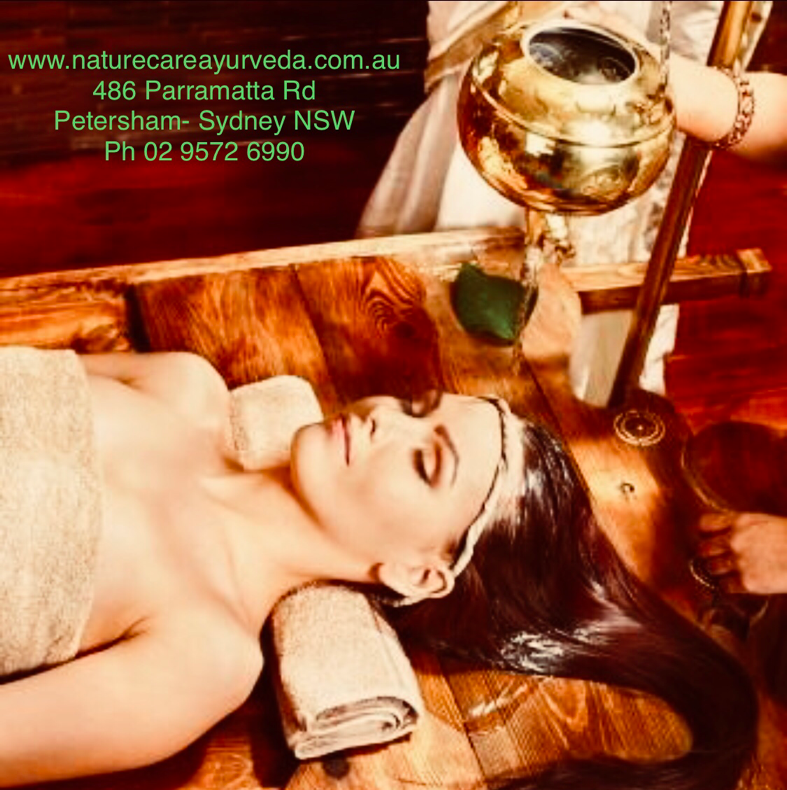
Nature Care Ayurveda Yoga Detox & Rejuvenation is the only Sydney based Ayurvedic centre where you can experience a complete range of Ayurvedic therapies like Panchakarma, Shirodhara, Detox, Abhyanga Body massage and consultation from experts.  The team is highly professional and working under the direction of Director Dr Naveen Shukla (Vice President Australasian association of Ayurveda for NSW), Panchakarma specialist, Chief Ayurveda physician,
Dr Nikhila Venugopal (Marma & Gynae specialist), 
Dr Urmila Anil Kumar (specialist in Panchakarma and skin care) & Dr Vishal Sharma (Member International Academy of Ayurveda).
Nature Care Ayurveda & Desi Australia in synergy focused to spread the word of Ayurveda in the community and promote wellbeing as “WE CARE FOR YOU”
For more information /to see a doctor/ for specific health concern visit our website www.naturecareayurveda.com.au or call us on 02 9572 6990
                        

Sunday, 1 December 2019

Summer and its Regimens

                             Summer significance

The changing seasons have a drastic effect on our body and summer is a particularly challenging season for which Ayurveda offers more effective solutions than any other wellness/lifestyle system.
Ayurveda provides logical information and practical lifestyle suggestions to beat this peak rays of sunlight. Change in routine is a major strike point which have crossed our mind at this point. We might be looking for ways to beat this heat and be free of the diseases of this summer season.  The long days of heat and bright sun lights creates a distress to the body
Though uncomfortable, it is time to welcome the feeling of the brighter Ray's of sun. Like each seasons summer has its own distinct personality. We can balance our habits, routines, dietary choices by regularly adjusting our life style and habits to accommodate the arrival of each season.
Summer is the season of pitta, characterized by heat and dryness. It is bright, hot, sharp, intense, and penetrating.

INCREASED PITTA AND PUR BODY

During this season commonly seen diseases are
- Skin rashes
- Acne
- Ulcers
- Acidity
- Heartburn
- Diarrhea.
Excessive pitta in the mind causes
- Irritability
- Competitiveness
- Egoism
- Anger😠
- Envy

Fasten your seat belt to keep your body and mind cool while things are heating up outside through Ayurveda and its principles


WATCH OVER YOUR DIET

The digestive fire is low in the summer and our appetite is weaker than it is in cooler seasons. In fact Ayurveda holds the opinion that the ‘Agni’ is lowest during the hottest part of the day. So it is advised to eat breakfast and lunch before the peak rays of the sun and a light dinner when the sun begins to set. Warm and light foods gives a protection as the chances of diseases through improper food is at its heights during this season. Hot, spicy and salty food increases the pitta Dosha. Hard liquor, red wine, and red meat are also too heating for the summer.
Sweet, bitter and astringent food tastes are pitta-pacifying. The best summer foods are made with milk, yogurt, ghee, cucumber, apples, pears, melon, watermelon, fresh cilantro, asparagus, broccoli, and basmati rice. Fresh salads are also one among the best foods during this season.
A secret recipe to escape this summer heat is by intake of cream of wheat cooked with milk and a pinch of cardamom and sugar.

STAY HYDRATED THIS SUMMER

Water is a magic drink to the body. Make sure to drink sufficient cups of water daily, along with cooling beverages like fresh coconut water and watermelon juice. Electrolyte drinks are much needed during this season to prevent any electrolyte imbalance, which seems to be common during this season

OUR REGIMENS AND THIS SUMMER

Water sports like swimming, scuba diving, and water polo are perfect but exercise are more perfect if done in the early morning or late evening to prevent the dehydration. Avoid the peak rays of sun as it can cause lots of diseases. It will be more comfortable to wear loose clothes so that the skin can breathe and shade your head.
Applying oils in the body also help in the temperature balance. Sandalwood, aloe Vera, turmeric prove to be the best herb for the sunburns

Optimized digestion, immunity and a good state of mind is what we need for a balanced state of body and mind. Ayurveda ensures that these goals are focused upon to make it as a foundation towards-  better health and living.
The other regimens to be followed will add to its benefit when consulted by a doctor as the series of pros-cons checklist is assessed with your constitution and the daily habits.
Roots of Ayurveda are so deep that its ultimate aim is a healthy body, mind and longevity. So the changes in the season is also important to decide whether you are on the right path.
With this sole aim of promoting a good health and providing a healthy diet and lifestyle guidance, Nature Care Ayurveda provides all the care for your improved health.
 The panel consists of Dr Naveen Shukla, the Founder and Director of Nature Care Ayurveda, Vice president of Australiasian Association of Ayurveda and the State representative of AAA for NSW.
Panchakarma & aphrodisiac speacilist
Dr Vishal Sharma, Ayurveda consultant and Life time member of International Academy of Ayurveda (IAA).
Dr Nikhila Venugopal is the Ayurveda consultant/doctor, Ayurveda gynae  and Marma specialist of Nature Care Ayurveda.
For more information or to see a doctor for specific health concern visit our website
www.naturecareayurveda.com.au or call us on 0295726990


Sunday, 24 December 2017

Merry Christmas and Happy New Year

Nature Care Ayurveda Yoga 🧘‍♀️ Detox and Rejuvenation Centre Petersham Sydney 
     www.naturecareayurveda.com.au
                   Ph 02 9572 6990

Wishing you all a very Happy 😊 Christmas šŸŽ„šŸŽ„ and Happy New YearšŸ™šŸ¼. 

ą„ सर्वे भवन्तु सुखिनः सर्वे सन्तु निरामयाः ।
सर्वे भद्राणि पश्यन्तु मा कश्चिद्दुःखभाग्भवेत् ।
ą„ शान्तिः शान्तिः शान्तिः ॥

Om Sarve Bhavantu Sukhinah
Sarve Santu Nir-Aamayaah |
Sarve Bhadraanni Pashyantu
Maa Kashcid-Duhkha-Bhaag-Bhavet |
Om Shaantih Shaantih Shaantih ||

Meaning:
1: May All become Happy,
2: May All be Free from Illness.
3: May All See what is Auspicious,
4: May no one Suffer.
5: Om Peace, Peace, Peace

A well said quote “If you want to see your FUTURE look into your PRESENT action”

 Similarly Ayurveda (#AncientWisdomOfHealing) believes, if we want to be healthy need to think šŸ¤” what is good for us and what need to correct before it’s too late.

We wish you all good health also enjoy this #PositiveEnergy time around the Globe šŸŒ.

Also Don’t forgot to Cleanse, Service and Rejuvenate #DETOX #PANCHAKARMA #RASAYANA #SHIRODHARA #ABHYANGA your body at NATURE CARE AYURVEDA to start your New Year NEW YOU


Friday, 24 November 2017

Yoga and eating food with hands

    
   Image result for picture of eating with hands
   https://naturecareayurveda.com.au/
          Yoga and eating food with hands


Eating  food with the hand is a part of tradition, Culture, ritual and health based on the concept of Pancha Karma Indriya ( five organs of action ) and pancha janana Indriya (five organ of senses ) of yoga and Ayurveda in INDIA.
Eating is supposed to be a sensory experience and it is said to evoke emotion and passion. According to the Vedas, hands are the most precious organs of action. The scriptures reveal how every finger is an extension of the five elements. Through the thumb comes space, with the forefinger comes air, the middle finger is fire, the ring finger is water and the little finger represents earth.
Hence, eating with one’s fingers stimulates these five elements and helps in bringing forth digestive juices in the stomach.
The nerve endings on our fingertips are known to stimulate digestion. Feeling your food becomes a way of signalling the stomach that you are about to eat. You become more conscious of the taste, textures and aromas.
Eating food is not merely a way to satisfy the hunger, but to sublimate the senses and infuse satisfaction. It is a way to nourish the inner self.
Traditionally, the six tastes (Sweet, Salty, Pungent, Astringent, Sour and Bitter ) and varied food items are served all together on one platter(called Thali )which immediately pacifies the sense of vision, smell, taste and touch.
Silence is observed, in order for the sense of hearing to be as less stimulated as possible and take the stimulus from the sub vocalization of the sound of chewing. All of this help in the activation of salivary glands and salivary amylase (the enzyme responsible for aiding in the catabolic action on the food). The five sensory organs ( eyes ,ears, nose , tounge and skin ) when engaged in the activity of eating food in the above said traditional method .Have minimal outgoing tendencies and the senses go into the anabolic or energy conservation mode so that this energy is utilized for digestion .
The five organ of action - hands ,feet, organs of reproduction, organs of eliminaton and vocal cords have the tendency to respond according to the information collected by the five sensory organs and are generally catabolic in nature.
·        The use of hands allows one to feel the texture and temperature of the food , which further stimulates the salivary glands using the sense of touch, smell, and sight. it also prevents one from eating very hot or very cold food as these extreme temperatures are not pleasing to the human body and  neither is good for the digestive fire.
·        As we use hands to eat food, we tend to bring the fingers and thumb close to each other , which forms Sumana Mudra. The center of the palm is the seat of digestive organs as per acupressure. When we use hands for eating food, we naturally trigger these pressure points, which help in the release of digestive juices from the liver and gall bladder.
·        The center of the palm is also one of the most therauptic Marma points that activate the release of pranic energy in the entire body, which is triggered in the use of hands
·        The general habit of using the dining table for having meals may lead to overeating. When we sit cross legged on the floor to eat food, every time we bend forward to break a morsel it puts pressure on the stomach and once the stomach being happily full and anything more would be over eating.  While sitting completely upright we supress this natural urge/ sign from the body's innate intelligence.  As per Ayurvedic principles, the stomach should be only 3/4th filled with food and the rest 1/4th space should be allowed for the free movement of gases and for the process of digestion.  

                                   Vedic ritual of eating food

Pancha Pranopasana Mudras can easily be practised by one and all before meals. They invoke a feeling of gratitude and connection with the process of eating (Anna Grahan) . In addition, they help in balancing the main vital current known as Mukhaya Pranas .
Practice this short exercise for revising this set of Mudras before your lunch / dinner . This is known as parishinchami  (encircling with water), and the eating of small helpings of rice is  known as pranahooti ( offering to the vital breeths ). It is performed twice a day before the meals .All other meals are  considered "extra " or secondary (upa bhojanam ). Parisecana mantra is sort of a "protection"for the food we are about to eat .
1.Parisecana: Take a comfortable seated posture  , preferably cross legged position  (sukhasna)on the floor .Chant the mantra : Satyam tvartena parishinchami (O Food !you are true . I encircle you with divine righteousness.) And circumambulate the food with a sprinkling of eater. This sprinkling of  water is known as "parisecanna." At night, this mantra is :Rtamtvasat yena parishinchami.
2.Pranahoothi: Perform the following Pranahoothi . Use only the thumb ,index finger and middle finger of the right hand take a very little amount food and swallow it without touching the teeth . The idea is that by first making an offering to the Pranas we pay homage to their life-giving power by virtue of their performing the bodily activities that are crucial to our survival. In this way , this ritual recognizes that  not only is food important to survival, but the very bodily function that we take for granted are essential, and we owe all of this to the supreme. who sits as the superintending power behind all bodily activity, no matter how mundane   

·        Om pranaye Savaha ( Hold Prana Mudra in left hand) and meditate upon the mouth regime

·        Om Apanaya Savaha ( Hold Apana Mudra in left hand) and meditate upon the lower body below the navel

·        Om Vayana Savaha ( Hold Vayana Mudra in left hand )and meditate upon the limb (arms, hands, legs, and feet ) and heart

·        OmSamanya Svaha (Hold Samana Mudra in left hand)and meditate upon the navel region

·        Om brahmani ma atma amrtavaya. This means," May my self be united in the supreme, so that i may attain immortality "

Dr Naveen Shukla
Founder Director Nature Care Ayurveda
State Rep. For AAA (NSW) Australia

For more information of Ayurveda please click at   https:// www.naturecareayurveda.com.au
  or like our page www.facebook.com/sydneyayurveda
               Ph  02-95726990

Saturday, 28 October 2017

A Successful Ayurveda Event NSW Sydney Glimpse


A Complete Holistic Bliss

www.naturecareayurveda.com.au

486 Parramatta Rd, Petersham 2049
Ph 02 9572 6990
Nature Care Ayurveda would like to say THANK YOU to all the dignitaries, Consulate General of India, Consul (Commercial) Mr Chandru Appar, 
Counselor Parramatta Mr Sameer Pandey,
Chief guests and our speakers for evening Dr Shaun Mathews, Dr Raj Kumar Sharma,
Farida S Irani- Director Subtle Energies, 
Media partners (Indian Link, Desi Australia), Harmohan Walia, Vivek Tiwari, 
President AAA (Australasian association of Ayurveda) Dr Santosh Kumar Yadav-Melbourne, AAA Representative NSW Dr Naveen Shukla,
Sydney Sanskrit School
 all AAA team and our valuable guests and friends of Nature Care Ayurveda- Neelam, Kanchan, Pankaj, Avanti, Deepak & all.


God doesn’t give us what we can handle, God helps us handle what we are given.

It was really a very informative evening with lots of knowledge exchange from the pioneers in the Industry. 

Every civilization in the World has their own traditional medical systems but Ayurveda is said to be as old as the Universe itself. Ever since the man started the journey of evolution with the mental and intellectual development man started understanding nature and how it works on humans to stay healthy. 

Ayurveda believes that governing principle in Nature governs our body too. Body- Mind and Soul they are like three tripods and combination called Purusha (Human)- THE SUBJECT MATTER OF AYURVEDA.

The Goal of Ayurveda is to prevent illness and promote health in mankind. The great rishis (Seers) studied and explained the effects of all part of plants, minerals etc  on human body to attribute this knowledge for the benefit of mankind also to complete the goal of Ayurveda.


Here are some glimpse of the beautiful priceless evening.

Welcome Note

                Lord Dhanvantari Mantra chanting by students of Sanskrit School Sydney

Consul Commercial Mr Chandru Appar & Farida S Irani-Director Subtle Energies 


    AAA President Dr Santosh appreciation token to NSW representative Dr Naveen Shukla


 Display of Herbs  


  Dr Raj Kumar Sharma (International Speaker)


AAA president Dr Santosh appreciation token to  Dr Vishal Sharma (Nature Care Ayurveda)

Mr Sameer Pandey (Counselor Parramatta NSW)

Consul Commercial Mr Chandru Appar appreciation token to AAA President Dr Santosh 


                                                                  Dr Shaun Mathew 


          Kanchan & Pankaj with Dr Naveen Shukla, Dr Shaun Mathew & Dr Vishal Sharma


Avanti (Psychologist- My Prana Portal) & her friend with Dr Vishal Sharma


                   Deepak Sharma with Dr Vishal, Dr Naveen, Dr Shaun & Dr Gaurav


                  Mr Chandru Appar (Consul Commercial- Consulate General of India Sydney)


              Dr Naveen Shukla with Dr Priya, Dr Taruna and Dr Anisha


     Dr Shaun Mathew (Guest Speaker NSW)                              


 Dr Vishal, Dr Santosh, Dr Naveen, Dr Shaun, Consul Mr Chandru & Dr Raj Kumar Sharma
                          
www.naturecareayurveda.com.au
486 Parramatta Rd Petersham 2049
contact@naturecareayurveda.com.au
Ph 02 9572 6990

Sarve Santu Niramaya